1. Electron avalanche: Electrons continue to increase in geometric progression, developing like an avalanche. This sharply increasing space electron flow is called electron avalanche.
2. Self-sustained discharge: When the electric field strength is greater than a certain critical value Ecr, the electron avalanche can be maintained and developed by itself only by the action of the electric field, and no longer depends on external ionization factors. The discharge of this nature is called self-sustained discharge. (Without the external ionization factor, only the electric field itself can sustain the discharge phenomenon.)
3. Non-self-sustaining discharge: The discharge that is maintained by external ionization factors is called non-self-sustaining discharge.
4. Streamer: The new discharge area (secondary electron avalanche) whose ionization strength and development speed are much larger than the initial electron avalanche and the process of their continuous merging into the initial avalanche channel is called streamer.
5. Polarity effect: Whether it is a long air gap or a short air gap, the development process of breakdown varies with the voltage polarity, that is, there is a polarity effect.
6. Volt-second characteristic: The relationship curve between the highest voltage and discharge time appearing on the gap under the same waveform and different impulse voltage peaks is called the volt-second characteristic.
7.50% impulse breakdown voltage (U50%): refers to the peak impulse voltage with a probability of 50% of an air gap being broken down.
8. Air-gap creeping discharge: a discharge phenomenon developed along the interface between a gas and a solid (or liquid) medium.
9. Flashover: When the creeping discharge develops to the breakdown of the two poles, it is called a flashover.
10. Counterattack: refers to the discharge flashover of the lightning protection against the equipment protected by the lightning strike.
11. Pollution flashover: flashover caused by pollution.
12. Polarization: Under the action of the electric field, the bound charge of the medium produces elastic displacement or dipole rotation corresponding to the direction of the electric field, showing its polarity to the outside.
13. Cumulative effect: The accumulation of a series of incomplete breakdowns can lead to complete breakdowns.
14. Aging: A series of physical and chemical changes that occur in insulation during long-term operation, resulting in the gradual deterioration of its electrical, mechanical and other properties.
15. 8 ℃ rule for thermal aging: For Class A insulating materials, if their operating temperature exceeds the specified value (105 ℃) by 8 ℃, the lifespan will be shortened by about half.
16. Insulation resistance: The resistance measured by a dielectric under pressure for an infinite time is called insulation resistance.
17. Absorption ratio: the ratio of the insulation resistance values measured by the insulator when the voltage is applied for 60s and 15s, which is called the absorption ratio. K=R60/R15.
18. Temporary overvoltage: Caused by the operation or failure of the power system, which lasts for a long time, has the frequency of the power supply or its harmonics, and is not attenuated or weakly attenuated.
19. Operational overvoltage: When the power system is in operation or an accident occurs, the oscillation of the inductance and capacitance loops caused by the sudden change of the state generates overvoltage, which is called the operation overvoltage.
20. Thunderstorm days: refers to the average number of days in which there is lightning discharge in an average year in the region.
21. Ground lightning density: the number of lightning strikes per square kilometer on the ground per thunderstorm day.
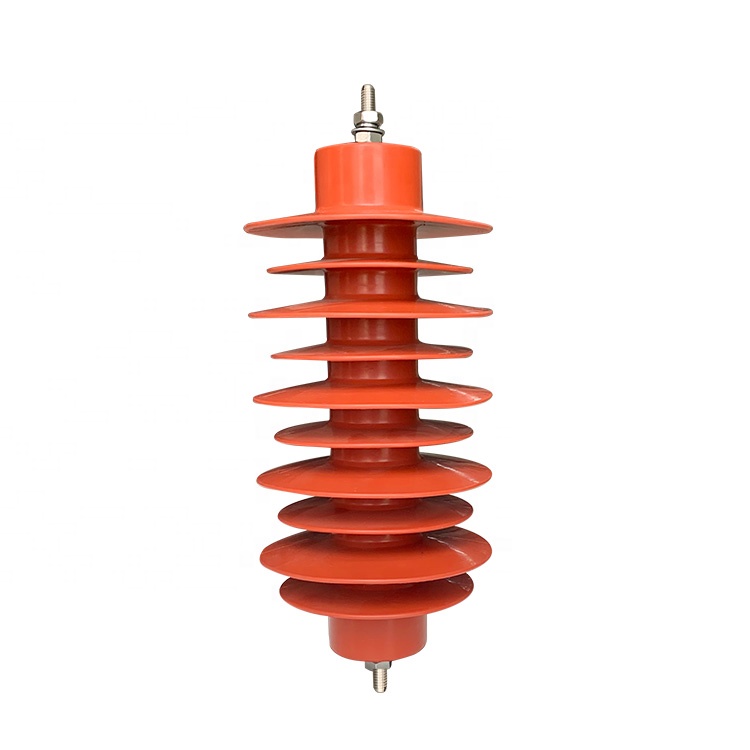
22. Power frequency freewheeling: After the overvoltage disappears, the power frequency current that continues to flow through the arrester gap under the action of the working voltage.
23. Arc extinguishing voltage: refers to the highest working voltage (referring to the phase voltage) when the arrester can still reliably extinguish the power frequency freewheeling arc.
24. Protection ratio: the ratio of the residual voltage of the arrester to the arc extinguishing voltage.
25.110% (100%, 80%) arrester: neutral point effective grounding system. Generally, when a single-phase grounding is short-circuited, the ground-to-ground voltage of the sound phase rises by about 0.8 times the line voltage, so "80% arrester" should be selected. When the neutral point is not grounded and the single-phase is short-circuited to ground, considering the influence of line parameters, the ground voltage of the sound phase is about 1.1 times the line voltage, so when choosing the arc extinguishing voltage of the arrester, 1.1 times the line voltage should be selected. It is called "110% arrester". For the system whose neutral point is grounded by the arc suppression coil, due to the influence of the arc suppression coil, the ground voltage of the sound phase is about the line voltage, so "100% arrester" should be selected.
26. Residual voltage: When the arrester is directly connected to the transformer, the voltage on the transformer insulation is the residual voltage of the arrester.
27. Lightning resistance level: refers to the maximum lightning current amplitude (unit: kA) when the line is struck by lightning, and its insulation will not cause flashover.
28. Lightning trip rate: refers to the number of trips caused by lightning strikes on a 100km long line every year at 40:00 on a thunderstorm day.
29. Arc rate: the probability of changing from impact flashover to stable power frequency arc.
30. Coupling ground wire: The overhead ground wire added under (or near) the overhead line wire is called the coupled ground wire.
31. Distance effect: When the distance between the arrester and the transformer is L, due to the refraction and reflection of the wave, regardless of the direction of the incoming wave, the voltage on the transformer insulation will be higher than the residual voltage of the arrester, and the larger the L, the higher the voltage. more.
32. Incoming line section protection: It is to strengthen protection on a section of line 1~2km adjacent to the substation to ensure that this line does not appear to be shielded or counterattacked.
33. Ferromagnetic resonance: Inductors with iron cores, when saturation occurs, the inductance is no longer constant, and resonance will occur under certain conditions.
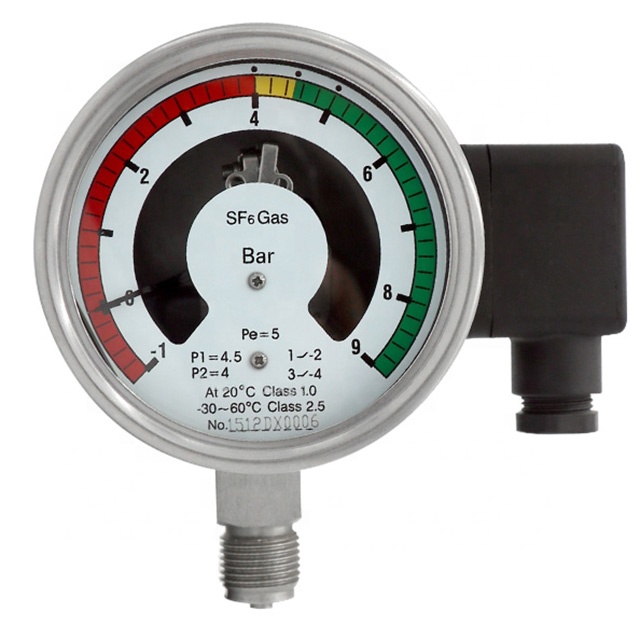 The principle, types and functions of Density Monitors
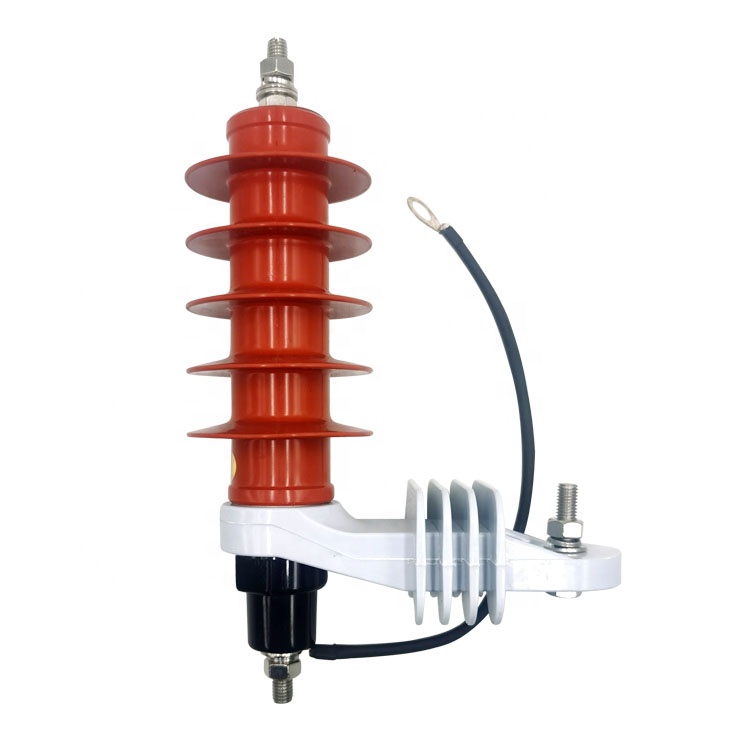 The Function of Lightning Arrester and How to Install it